Classification
Why is the taste different?
If you have ever gotten seawater in your mouth, you know that it tastes very salty. This is because seawater contains a large amount of minerals (especially salt). Seawater has a total mineral content of more than 35000 miligrams per liter (mg/l). In principle, seawater is just rainwater that has received a very large amount of minerals. Danish tap water is also rainwater, but it contains fewer minerals than seawater. Danish tap water has an average mineral content of 200 – 480 mg/l. But both tap water and seawater are basically rainwater. The example is extreme, but it shows that it is the minerals that give the water its taste and that water with different mineral contents taste differently.
The content of minerals in bottled water varies from around 0 mg/l to more than 13,000 mg/l. The difference in the mineral content gives great variations in the taste. There is also sparkling water with carbonic acid, which gives a sour taste and different mouthfeel depending on the amount of CO2 in the water.
To have an accurate frame of reference for water with differing mineral and carbonic acid content, the water has been given classifications. Here we will look at the following:
- Classification of the mineral content
- Classification of carbonation
- Classification of the water
Classification of the mineral content
It is, as mentioned, the minerals that give water its flavor. Water that contains few minerals has a subtle taste, and water enriched in many minerals has a stronger taste. Danish tap water and most of the bottled water that you can buy in Denmark is classified as “medium mineral-containing water.” The water can be classified in five categories: 1) very low mineral content, 2) low mineral content, 3) medium mineral content, 4) high mineral content and 5) very high mineral content.
Almost all Danes drink water of the “medium mineral content” category. The exception is when travelling abroad in places with a larger water selection. Even though in Denmark, you rarely try water other than medium mineral-containing water, we stubbornly insist that “water tastes similar” and that “we have the best water (tap water) in the world.”
Different countries and associations have different classifications of the mineral content. The classifications from Denmark, Germany and the Fine Water Society are provided below. In the “The flavor of water” section, you can read more about which minerals give water its flavor.
Read more about classification of the carbonation here.
Read more about the classification of the water here.
Denmark
The numbers are expressed in mg/l, based on a drying test (dry residue 180)*
| Very low mineral content | <50 | mg/l |
| Low mineral content | <500 | mg/l |
| High mineral content | >1500 | mg/l |
* The drying test means that water is heated to the temperature of 180 degrees. When the water is evaporated, the excess minerals are weighed, and the obtained value is expressed in mg/l.
Germany
The numbers are expressed in TDS *
| Very low mineralization | <50 | mg/l |
| Low mineralized | 50 – 500 | mg/l |
| Medium mineralized | 500 – 1500 | mg/l |
| High mineralized | >1500 | mg/l |
* TDS = Total Dissolved Solids. TDS show how many minerals are contained in water. It is calculated in milligrams per liter, mg/l.
Fine Waters Society
The numbers are expressed in TDS *
| Super low | <50 | mg/l |
| Low | 50 – 250 | mg/l |
| Medium | 250 – 800 | mg/l |
| High | 800 – 1500 | mg/l |
| Very high | >1500 | mg/l |
The Fine Waters Society, whose classification is mentioned above, is an international association based in the United States. The purpose of the association is to promote knowledge and interest for fine waters. The association’s classification is the one that will be used on the following pages when referring to mineral content.
Gourmet water
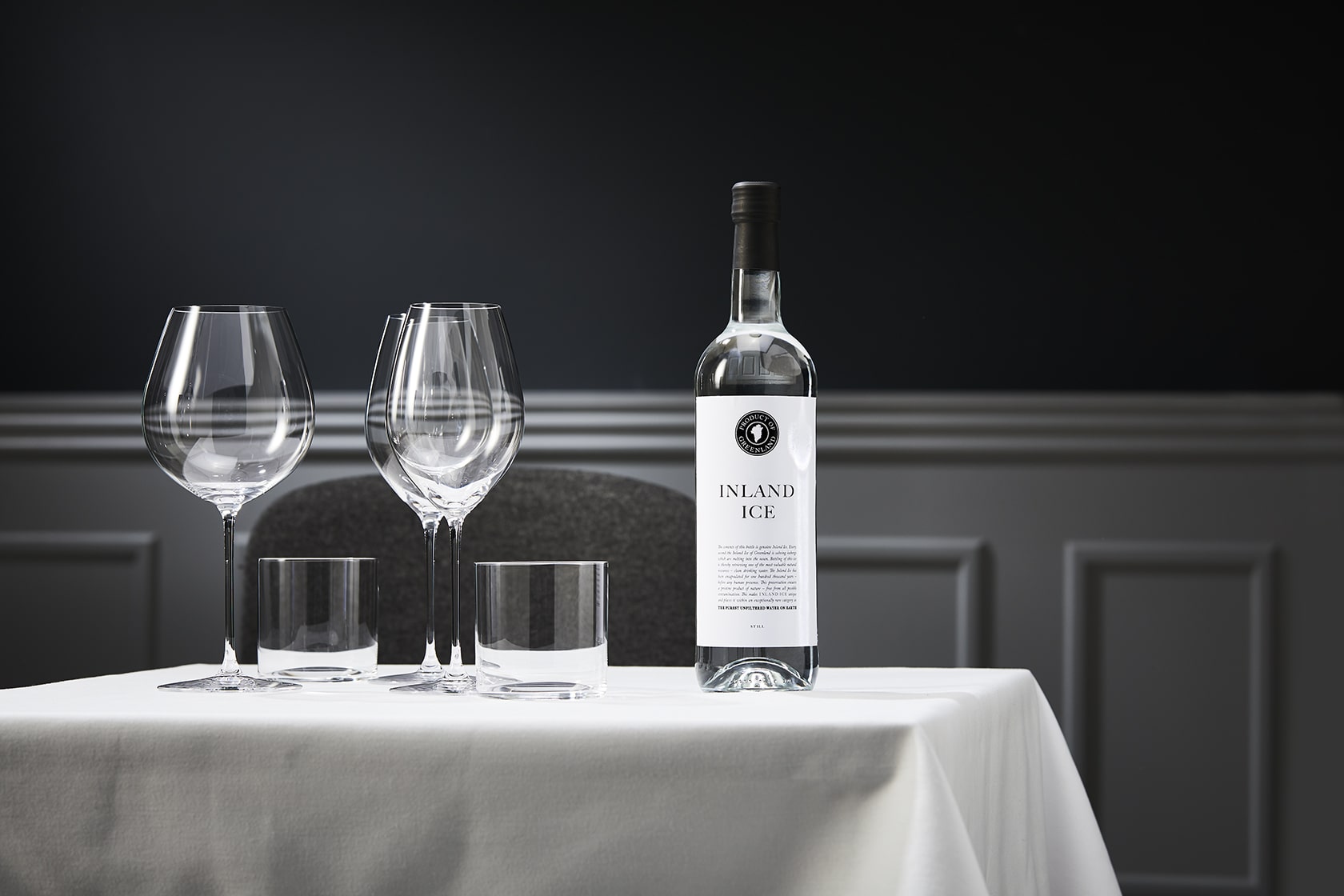
The gourmet concept is not only reserved for food, wine, coffee, licorice, etc. There is also gourmet water, which, due to its taste and history, can help lift the overall taste experience.
Read more here.
Classification
As with wine, there are different classifications. There are also classifications of the mineral content and the carbon dioxide content, both of which are important for the taste experience.
Read more here.
Taste and senses
How do we perceive taste? What affects the overall taste? Read about our five senses and why they all influence the taste. Learn about mouthfeel, which is very important for the taste of water.
Read more here.
The flavor of water
It’s the minerals in water that contribute to the taste, but the mouthfeel plays a major role. Read about which minerals are in the water, how they affect the taste, and how carbon dioxide affects the taste.
Read more here.
Water tasting
Can you taste the difference? Which water to Use? Without carbonation or with carbonation? What influence do the glasses have on what you drink? In what order should you taste the water?
Read more here.
Gastronomy
The wrong water with food or wine can disturb or completely destroy the taste experience. Which factors in the water have influence and how do you pair water with food and wine?
Read more here.
My name is Carsten Skov, and I am the first Dane to have completed the education as a water sommelier at Doemen’s Academy in Germany, which is an old well established educational institution in the field of sensory training.
If you have any questions or comments, please write to me at cph@smagenafvand.dk