The flavor of water
How does water taste?
“Water has no taste” and “all water tastes similar” are statements that you often hear when talking about water. This is due, among other things, to the fact that we in Denmark are so fortunate that we have some of the cleanest drinking water in the world, and that we therefore largely only drink water that comes from our own tap. Additionally, Danish stores have a very limited selection of water, so the Danes drink virtually nothing other than tap water and mass-produced water. We only drink water that has a mineral content of 200-480 mg / l. We have very limited experience of tasting different water compared to other European countries.
But water tastes different! It is easy to prove chemically, but taste wise, it can be difficult to identify tastes, especially because you do not know what to look for, and the flavors in water are very discrete compared to drinks such as wine and beer.
As mentioned in the section “Classification” there are different classifications of water in relation to mineral content. It is the minerals that give the water taste, so the fewer minerals, the more discreet the taste, and the greater the amount of minerals, the stronger the taste. In Denmark you can almost exclusively get water with a mineral content of 200 – 480 mg / l, although there are thousands of different water with mineral content from 0 – 13000 mg / l. As mentioned earlier, it is important that you are consciously taste the water if you want to find the subtle taste nuances.
Water has terroir
Why does wine taste different, even if it is made from the same grapes? Why does chocolate from South America taste different from chocolate from Africa? They taste differently for the same reason that water tastes different. The different tastes are due to terroir.
According to Wikipedia, the description of “terroir” is:
“Terroir comes from the word terre, which is the French word for soil. It was originally a French term for wine, coffee and tea, which identified the particular characteristics of particular varieties with geography, geology and climatic conditions. Agricultural areas in the same area share the same soil, weather conditions and cultivation techniques, all of which contribute to the unique qualities of the harvest. The same grape variety can be grown in different regions thus producing very different wines.” (Wikipedia, the free encyclopedia)
As can be seen, the term terroir covers the fact that the surrounding geography and geology influence the taste of the wine. It is exactly the same thing that applies to water.
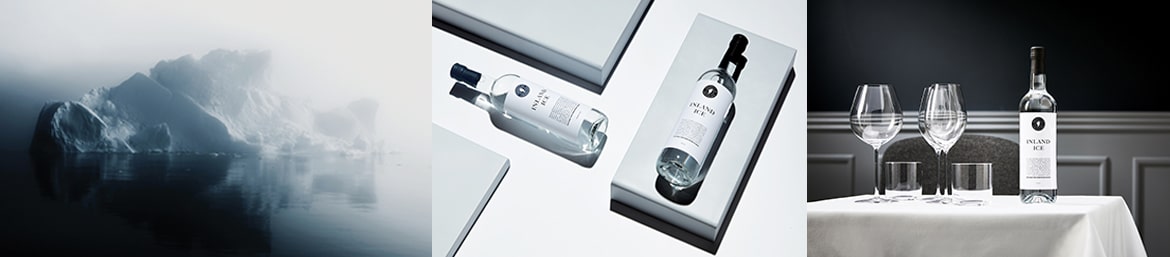
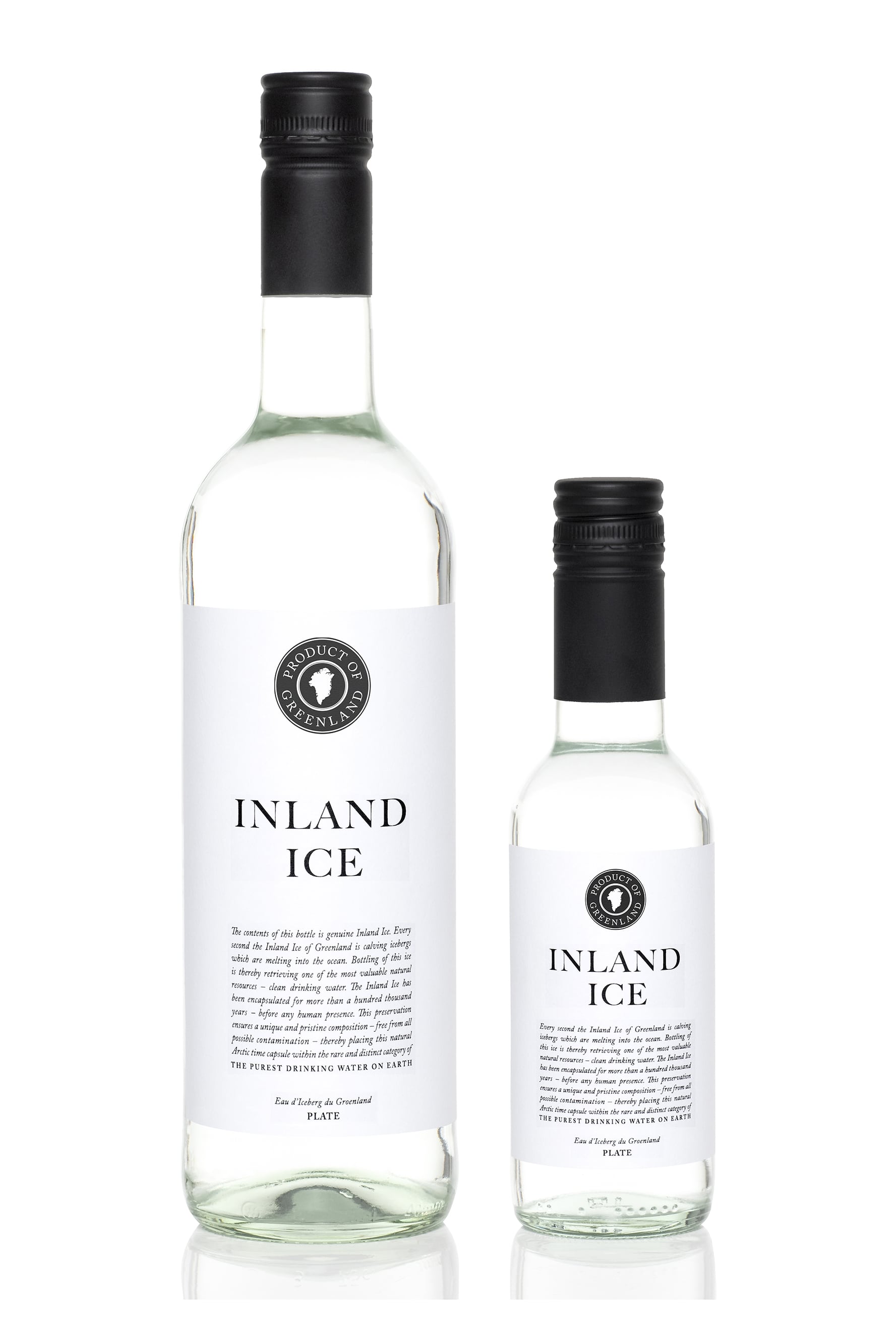
Water gets its unique composition and taste from the environment from which the water comes. In Greenland, much of the rainwater freezes into ice and is stored in the ice sheet. The water does not come underground and is therefore not in contact with the mineral-containing subsoil. Therefore, water from the ice sheet or glaciers contains very few minerals – it’s terroir. Some parts of the Danish subsoil contains high amounts of calcium so the eater from here automatically contains higher calcium than water from places where the subsoil does not contain the same amount of calcium -this is also terroir.
Terroir in water can be so significant that water extracted from the same mountain can have different tastes, depending on which side of the mountain the water comes from. This is the case in Valsertal, Switzerland.
Flavor – Minerals in the water
It is the minerals and their interrelationships that help to give water its distinctive flavor. In natural water, mineral water and spring water there are usually only three minerals, so-called CATIONS, which, in the right quantities, can have relevance for the taste of water. The three cations give the water a taste of sweet, sour, bitter and salt, depending on the quantities present in the water;
Natrium Na+ Kalcium Ca2+ Magnesium Mg2+
Thresholds
In order for humans to taste the minerals, the content must be above or equal to what is called the threshold value – in English, type detection threshold (TDT). If the amount is below the threshold, it cannot be tasted, but it can often still be felt in the mouth as a mouthfeel. Mouthfeel is, for example, when we can feel dryness or an oily coating of the oral cavity.
Compound minerals
In addition to the three minerals mentioned above, sodium, calcium and magnesium, there are three additional minerals, which are called ANIONS, which, by a chemical reaction, bind together with the three cations and thereby make new substances which help to give taste and mouthfeel to water.
Chloride CL- Sulfat So4, 2- Bicarbonat HCO3-
By a chemical reaction, the CATIONS and ANIONS bind together to form new minerals, which in turn add new flavors and mouthfeels to the water.
Listed below are some of the most normal compound substances that are formed when the three CATIONS are bound together with the ANIONS.
| Cation | Anion | New substance | Formula |
| Sodim Na+ | Chloride Cl- | Sodium Chloride | NaCl+ |
| Sodium Na+ | Sulfat So42- | Sodium Sulfat | Na2So4 |
| Sodium Na+ | Bicarbonat HCO3- | Sodium Bicarbonate | NaHCO3 |
| Calcium Ca2+ | Chloride Cl- | Calcium Chloride | CaCl2 |
| Calcium Ca2+ | Sulfat So42- | Calcium Sulfat | CaSo4 |
| Calcium Ca2+ | Bicarbonat HCO3- | Calcium Bicarbonate | CacO3 |
| Magnesium Mg2+ | Chloride Cl- | Magnesium Chloride | MgCl2+ |
| Magnesium Mg2+ | Sulfat So42- | Magnesium Sulfat | MgSo4 |
As is the case with the other minerals, the minerals – although below the threshold perception of taste – can still contribute to the flavor, as it provides a special mouthfeel.
In addition to CATIONS and ANIONS and the compound mineral that they they form, there are other minerals that help to give taste and mouthfeel. You can read more about taste and mouthfeel in the section “Taste and mouthfeel of the minerals”
Where can I find information on minerals and mineral content?
For mineral water, it is a requirement that the mineral content mentioned on the label. It is not a requirement for spring water and packaged water. However, most gourmet waters will have information about the mineral content, as the producers know how important it is in relation to the flavor. The bottles will usually contain information about the CATIONS and ANIONS contents (see above) in milligrams per liter – mg / l. The total mineral content is normally also mentioned on the lable. The total mineral content is stated in TDS, PPM or Dry Residue 180. See more below.
Total mineral content
The total mineral content is usually given on the label. Depending on where in the world the water is produced, different methods are used to state the total mineral content.
TDS or PPM
TDS = Total Dissolved Solids. It is an expression of how many dissolved minerals are in the water. This is indicated in milligrams per liter – mg/l.
PPM = Parts Per Million. In some places, the TDS level is NOT indicated as mg/l but as PPM, but it is completely the same. So TDS 55 mg/l is the same as 55 ppm.
Dry residue 180°C
This means that the water is heated to 180 degrees Celsius until the water is evaporated. The minerals do not evaporate, and they are then weighed, after which the figure for “Dry residue 180°C” is obtained. The number is given in mg/l.
The amount of minerals
The TDS level in bottled water can range from 0 for distilled water to more than 13000 TDS per mg / l. The higher the TDS, the more prominent the taste. In wine terms, you can say that water with low TDS is the fine white wines and high TDS water is the strong red wines.
pH-value, sweet and bitter taste
Water can taste sour, sweet and bitter. It is, among other things, the water’s pH value that influences the taste.
The pH is a unit of measurement for the base and the acid content of food and liquids. The pH scale ranges from 1 to 14 pH, with 1 being the most acidic, and 14 being the most basic.
pH scale:
| 1 – 6,9 | pH | Sour / tart |
| 7,0 | pH | Neutral |
| 7,1 – 14 | pH | Basic |
Acidic taste comes from acidic substances with a pH of 1-6.9. Basic substances can taste bitter and have an oily feel. Water with a pH of 7.3 – 7.5 may, for some, taste sweet.
The pH scale is logarithmic. This means that a difference of 1 corresponds to increasing or decreasing the acid or base content by 10. That is, water with a pH of 5 is 10 times more acidic than water with a pH of 6.
The Fine Water Society has also classified the pH and taste that can be used to match water with food or wine.
| 5,0 – 6,7 | pH | Sour |
| 6,7 – 7,3 | pH | Neutral |
| 7,3 – 7,8 | pH | A little sweet |
| 7,8 – 10 | pH | Alkaline / basic / bitter |
Aroma
As a rule, water should not smell of anything. Problems with smell in the water can be due to many different things, but a common trait is that they should not be present. The odors or “off-flavors” as they are commonly called, usually originate from remnants of detergents in recycled bottles or chemicals from plastic bottles. It is extremely rare that it is the water itself that causes any odors.
Mouthfeel / texture
As mentioned earlier, mouthfeel is the most important factor for the overall taste sensation of water. But what is mouthfeel? In everyday speech, you do not normally use the word mouthfeel, but instead speak of consistency or texture. Mouthfeel comes from food or drinks coming into contact with nerve reflectors in the mouth. We are usually not aware of mouthfeel, and usually only respond to it if it is different than expected. Mouthfell is when we:
- can feel lumps in food
- can feel something creamy in the mouth
- can feel something brittle in the mouth
- can feel the bubbles in carbonated water
- can say that a wine has “body” or “fullness”
- can feel dryness or a coating in the mouth
- can feel temperature differences in the mouth.
Mouth feeling is part of the touch sense. You can read more about it in the section “Taste and senses”
Hardness
The hardness is an expression of the content of calcium and magnesium in the water. Harder water has a thicker consistency, which, in some cases, can be seen when looking at two different glasses of soft and hard water. The difference in consistency also gives a difference in mouthfeel.
Water hardness is measured in different ways in different parts of the world:
- German hardness
- English hardness
- American hardness
- French hardness.
In Denmark, we use the German hardness scale, which is expressed in ° dH = degree Deutsche Härte. One degree on the scale means that the water contains 10 mg of dissolved lime, or 7.19 mg of dissolved magnesium per liter.
| Hardness in ° dH | Classification |
| 0 – 4 | Very soft |
| 4 – 8 | Soft |
| 8 – 12 | Medium Hard |
| 12 – 18 | Pretty hard |
| 18 – 24 | Hard |
| 24 – 30 | Very hard |
| >30 | Extremely hard |
1 ºdH = 17.86 PPM American hardness / 1.25 English hardness / 1.78 French hardness
Gourmet water
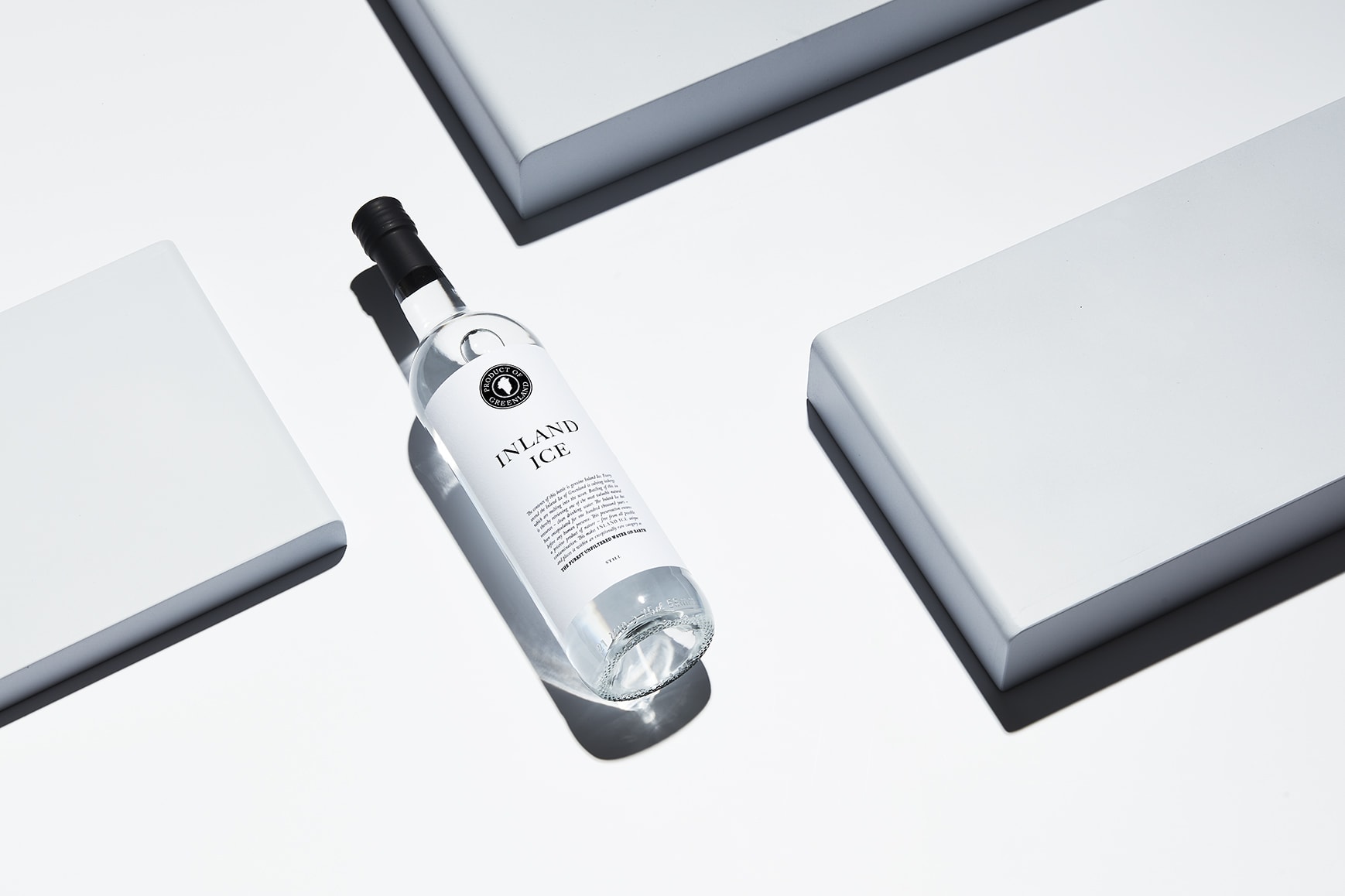
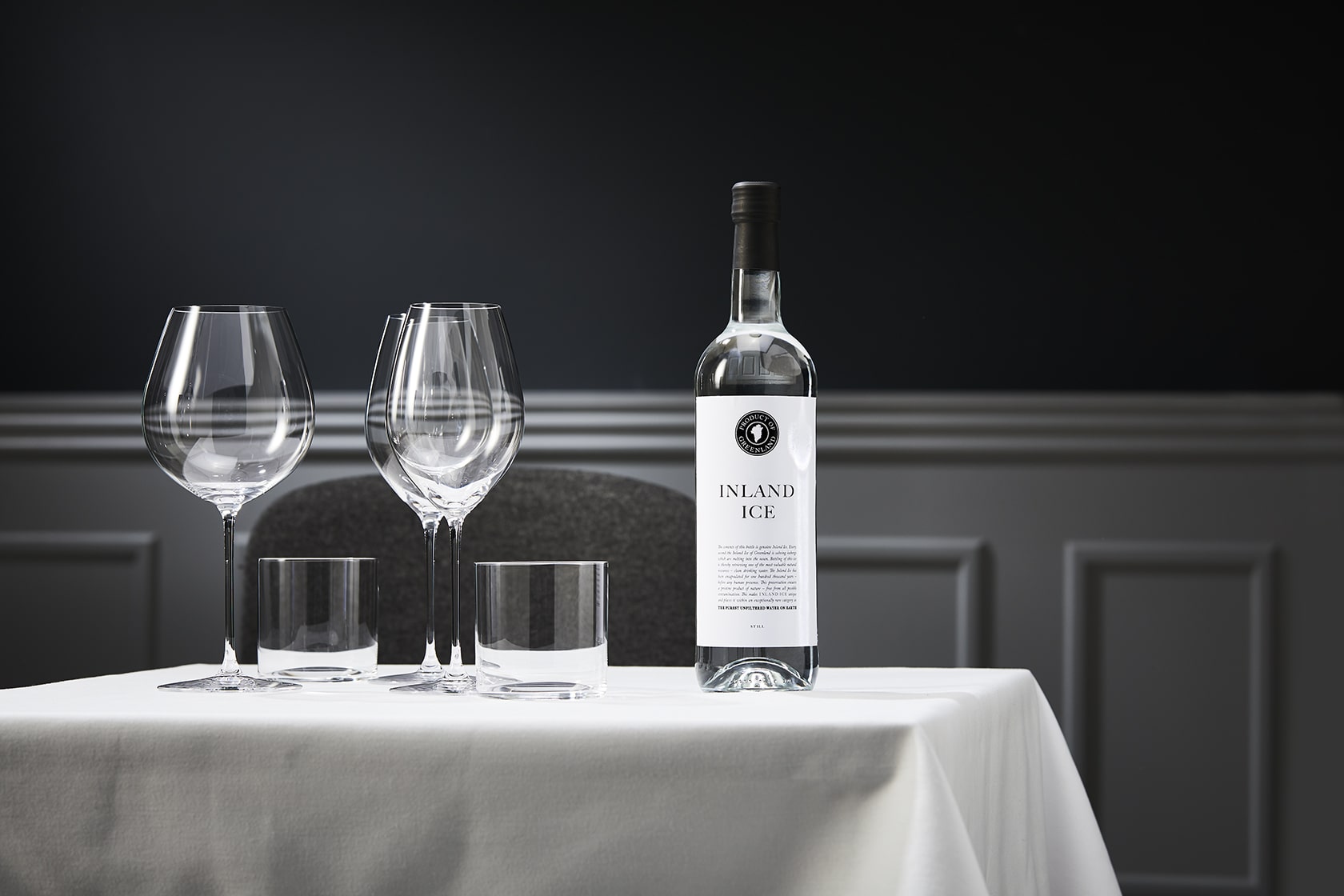
The gourmet concept is not only reserved for food, wine, coffee, licorice, etc. There is also gourmet water, which, due to its taste and history, can help lift the overall taste experience.
Read more here.
Classification
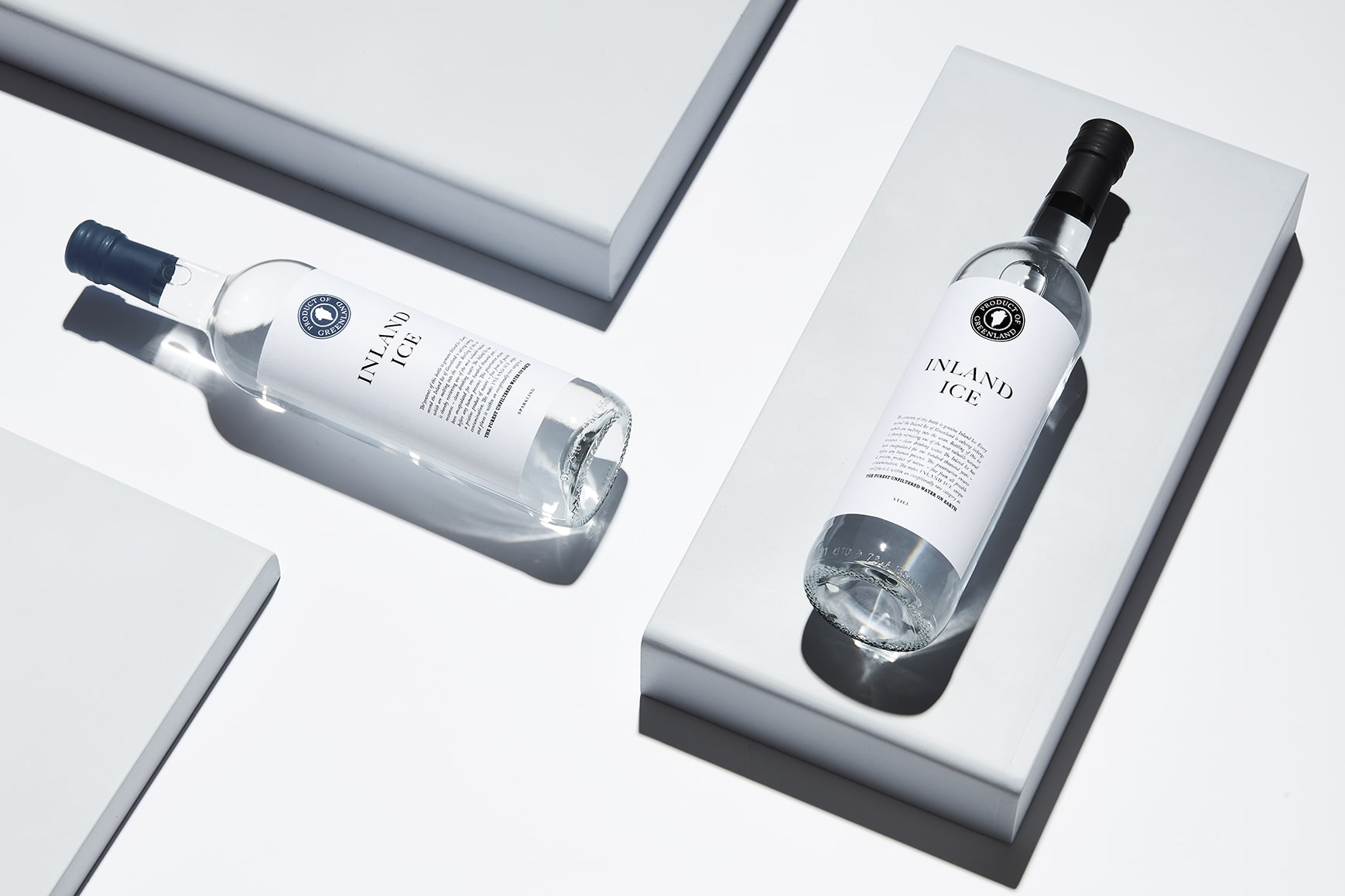
As with wine, there are different classifications. There are also classifications of the mineral content and the carbon dioxide content, both of which are important for the taste experience.
Read more here.
Taste and senses
How do we perceive taste? What affects the overall taste? Read about our five senses and why they all influence the taste. Learn about mouthfeel, which is very important for the taste of water.
Read more here.
The flavor of water
It’s the minerals in water that contribute to the taste, but the mouthfeel plays a major role. Read about which minerals are in the water, how they affect the taste, and how carbon dioxide affects the taste.
Read more here.
Water tasting
Can you taste the difference? Which water to Use? Without carbonation or with carbonation? What influence do the glasses have on what you drink? In what order should you taste the water?
Read more here.
Gastronomy
The wrong water with food or wine can disturb or completely destroy the taste experience. Which factors in the water have influence and how do you pair water with food and wine?
Read more here.
My name is Carsten Skov, and I am the first Dane to have completed the education as a water sommelier at Doemen’s Academy in Germany, which is an old well established educational institution in the field of sensory training.
If you have any questions or comments, please write to me at cph@smagenafvand.dk