Water tasting
In the previous sections we learned what taste and flavor are and what it is that gives the water its specific taste. In this section, we will try what we have learned in practice and taste the water.
However, there are a few practical things that must be in place before you can start to taste the water.
- The water
- The glasses
- The water’s temperature
- The order
The water
The water tasting takes place either with water without carbonation or water with carbonation and not a mix of both. If you want to try both still and sparkling water, you should start with the still water and finish all samples before you continue with the sparkling water.
For still water, start with the water with the lowest mineral content (TDS or dry residue) and continue with water with an increasing mineral content. The same is for sparkling water. Start with the water with the lowest CO2 content and then proceed in an order of increasing CO2.
Use the classifications of The Fine Waters Society listed in the “Mineral Classification” and “Classification of Carbon Content” sections to select water with increasing TDS and CO2 levels, covering all classifications.
For water WITHOUT carbonation, use Fine Waters’ classification of the mineral content – expressed in TDS.
| Very low | <50 | mg/l |
| Low | 50 – 250 | mg/l |
| Medium | 250 – 800 | mg/l |
| High | 800 – 1500 | mg/l |
| Extremely high | >1500 | mg/l |
* TDS = Total Dissolved Solids. TDS is an expression of how many minerals are present in the water. It is given in milligrams per liter mg/l.
For water with carbonation, use Fine Waters’ carbon dioxide classification, expressed in CO2 in mg/l.
| Without carbonation | 0 | mg/l |
| Lightly bubbly | 0,1 – 2,5 | mg/l |
| Moderate carbonation | 2,5 – 5,0 | mg/l |
| Classic carbonation | 5,1 – 7,5 | mg/l |
| Heavy carbonation | >7,5 | mg/l |
The glass
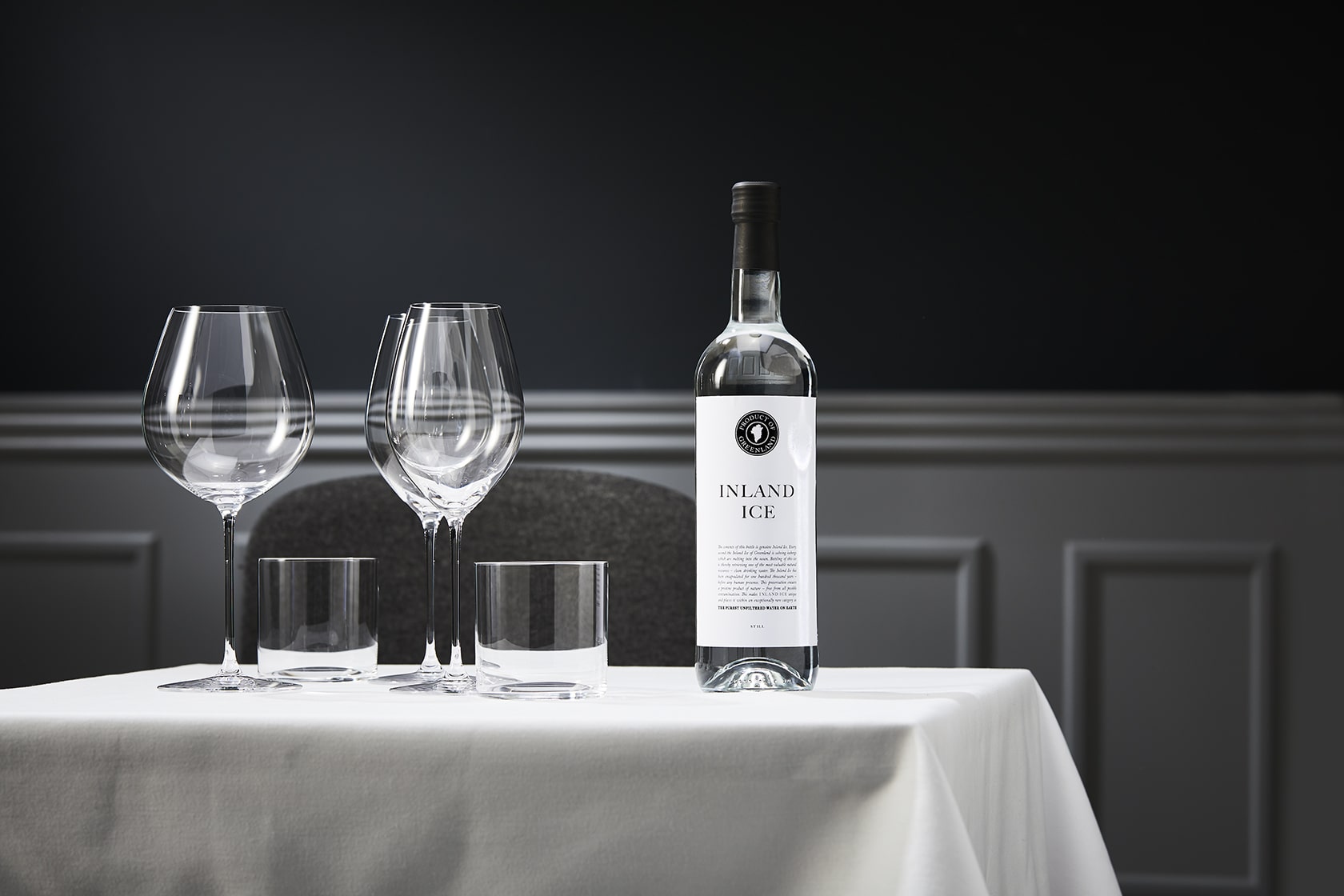
In principle, you can drink from all kinds of glasses. However, it is important to know that it doesn’t take much to disturb the subtle taste nuances in the water. That is why the quality of the glass plays a major role. Therefore, never use glass or mugs made of plastic.
As a general rule, one must pay attention to the following:
- The glasses must not be dirty.
- The glasses must not contain detergent residues.
- The glasses must not be dusty.
- The glasses should be odorless.
- The glasses must not contain mineral residues (from hard water).
When drinking, one does not think that the glass unconsciously affects our five senses and thereby the overall taste perception. The glass and its design influence, among other things, the following:
The sense of sight
- The transparency depends on the quality of the glass. The greater the transparency, the shinier the water will be.
- The smoothness of the inner surface influences how the bubbles develop in water with CO2. The smoother the inner surface, the fewer bubbles are formed there.
- If the glass has cracks or is colored, it may change the visual impression.
The sense of smell
- The shape of the glass influences how long it takes for the bubbles in the carbon dioxide to transport the aroma to the surface.
The sense of taste
- The glass influences the temperature of the water. The warmer the water, the greater the taste impressions.
The sense of touch
- The thinner the glass, the more comfortable it feels to drink from it.
- The weight, shape and size of the glass influence the overall taste experience.
The sense of hearing
- The sound when pouring depends on the material the glass is made of.
- The sound depends on the geometry of the glass, how much is in the glass and the position of the glass in the hand.
Water temperature
If you have tasted lukewarm water, you know that the taste is different from cold water. To obtain the best taste of the water, it is recommended that it be drunk at a temperature between 12-17 degrees Celsius. Non-carbonated water tastes best at 12 degrees and water with very strong carbonation tastes best at 17 degrees.
Order of the water tasting
- Start with water without carbonation. Start with water with the lowest mineral content and continue with water with an increasing mineral content. Try to describe the water (see later). Use Fine Waters’ mineral content classification.
- When you have finished the water without carbonation, do the same with the water with carbonation. Here one must start with water with the lowest CO2 content followed by water with increasing carbon dioxide content. Try to describe the water (see later). Use Fine Waters’ classification of the CO2 content.
- Be sure to follow the advice given above on glass, procedure, description and temperature.
How do you taste the water?
The order to taste water is the same as when you taste beer or wine:
- See
- Smell
- Taste
- Describe
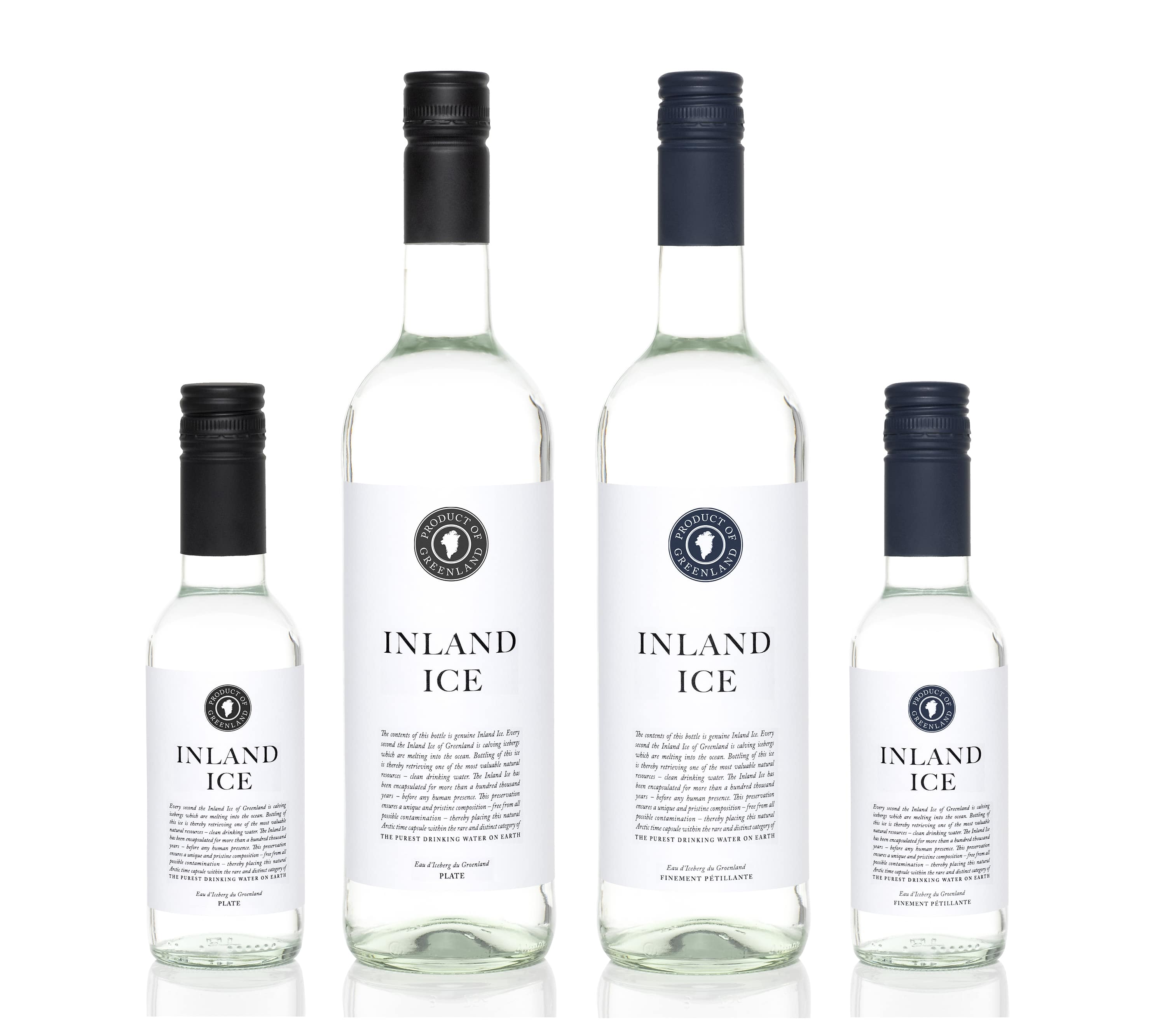
Look
Look for color shades in the water. Viscosity – like wine, some water can make “legs” down the inside of the glass. Is the water thick or light? If the water is carbonated, look for how powerful bubbles there are, how they evolve, and what speed they rise with.
Smell
As mentioned earlier, water should not smell of anything. However, it is possible to collect salt or sulfurous scents in water with a high mineral content. Carbonated water also helps to enhance any fragrance.
Taste
Taste and mouthfeel. As with wine, the best way to taste the water is by gargling water, so that it can move around the entire oral cavity. In this way, the water molecules spread to the entire oral cavity, making it easier to capture taste and mouthfeel – sweet, sour, salt or bitter, neutral, temperature, viscosity, CO2, astringency etc.
Describe
Try to put into words what you have seen, smelled, tasted and felt. Finding words at the beginning can be difficult. See a list of words that can be used here.
Analysis Schedule
For wine you have a wine wheel that can help when analyzing the taste of a wine. Something similar does not exist for water. I have therefore made an analysis scheme that can be downloaded and used when you have to taste some new water yourself. Use it in the beginning, so you are sure to remember all the things and so you can later compare the different waters you have tried.
Analysis schedule for still water here.
Analysis schedule for sparkling water here.
Subjectivity
Remember that all individuals have different taste experiences and therefore there is – as with wine – no water that is “the best.” It is entirely up to the individual what you like: high or low mineral content, without carbonation or with carbonation.
Gourmet water
The gourmet concept is not only reserved for food, wine, coffee, licorice, etc. There is also gourmet water, which, due to its taste and history, can help lift the overall taste experience.
Read more here.
Classification
As with wine, there are different classifications. There are also classifications of the mineral content and the carbon dioxide content, both of which are important for the taste experience.
Read more here.
Taste and senses
How do we perceive taste? What affects the overall taste? Read about our five senses and why they all influence the taste. Learn about mouthfeel, which is very important for the taste of water.
Read more here.
The flavor of water
It’s the minerals in water that contribute to the taste, but the mouthfeel plays a major role. Read about which minerals are in the water, how they affect the taste, and how carbon dioxide affects the taste.
Read more here.
Water tasting
Can you taste the difference? Which water to Use? Without carbonation or with carbonation? What influence do the glasses have on what you drink? In what order should you taste the water?
Read more here.
Gastronomy
The wrong water with food or wine can disturb or completely destroy the taste experience. Which factors in the water have influence and how do you pair water with food and wine?
Read more here.
My name is Carsten Skov, and I am the first Dane to have completed the education as a water sommelier at Doemen’s Academy in Germany, which is an old well established educational institution in the field of sensory training.
If you have any questions or comments, please write to me at cph@smagenafvand.dk