Taste and senses
The overall experience of flavor is a combination of several of our senses. It can be defined as:
Flavor (Total taste experience) = taste + aroma + mouthfeel
Flavor = The overall combined impression of taste, aroma and mouthfeel.
Taste = Refers to our senses in the mouth and includes the five basic tastes: salt, sweet, sour, bitter and umami.
Aroma = Something perceived in the nose and specifically related to the sense of smell.
Mouthfeel = Occurs in the mouth and is a result of the stimulation of nerve receptors that are part of the sensory sense.
The flavor experience is thus a result of the taste, smell and touch sense. If one does not work, it interferes with the overall impression of the flavor. You can even try to hold your nose when eating something. The total impression is disturbed, as one cannot detect aromas in the mouth.
In addition to the taste, smell and touch senses, the visual and hearing senses also influence the overall impression of the total flavor experience.
Senses
Humans have five senses, which together contribute to the total taste experience.
- Taste
- Smell
- Touch
- Hearing
- Sight
Below, we go through how the individual senses work and how they affect the flavor perception.
The sense of taste
In the past, it was believed that the various receptors for different flavors were placed separately in specific areas of the oral cavity, so that one could only taste bitter at the back of the mouth and salt at the front of the tongue. Today it is known that the receptors for the different flavors are located all over oral cavity, so that a specific taste is not placed in a specific place in the mouth.
The human has on average 4,500 taste buds that sit on the tongue, the palate, the pharynx, the throat and the epiglottis. Each taste bud contains sensory cells. These sensory cells have receptors that can capture the five basic flavors: sweet, salty, sour, bitter and umami. For water, just the first four basic tastes are interesting.
Sweet
Sweet is the first taste we get to know. This is because milk contains lactose which is a sugar that helps babies drink more after birth. The affection for sweet sticks to us through the most of our life’s. Sweet products: Sugar, juice, syrup, honey, strawberries, peas, corn, apples, ice cream and dessert wine.
Salt
Salt is important for the body’s supply of minerals. The taste comes from sodium, lithium and potassium. Salty products: Salt, oysters, parmesan, feta cheese, bacon, sausages, soy, peanuts and feta.
Sour / tart
With a sour taste, saliva production increases in the underside of the mouth. It is a function that was originally developed as a defense against, among other things, rotten food. Sour products: Lemons, vinegar, white wine, apples, oranges, sea buckthorn, sour cream and white wine.
Bitter
Bitter was previously the body’s own reaction to toxic and dangerous substances. The bitter taste can, among other things, be felt at the back of the throat and is the human defense against swallowing toxic or dangerous things. Bitter products: Coffee, dark chocolate, grapefruit, walnuts, rye bread, beer, tonic and red wine.
Metallic “taste”
It should be mentioned here that sometimes you can taste a metallic taste in water. But “metallic” is not a taste. What is perceived as taste is actually an odor/smell. It is a retronasal scent that is created by air molecules that are pulled up into the nasal cavity at the back of the neck (see the section on sense of smell later on the page). You can check it by putting the water that tastes metallic on the skin of arm. You will now detect the metallic scent.
It is important here to state that there are ONLY the five basic tastes and NO other tastes. One cannot smell the five basic tastes, they can ONLY be tasted.
The sense of smell
The sense of smell is generally considered less important than the sense of hearing and taste. However, its absence will mean a great loss of quality of life for people.
The words “aroma” and “bouquet” are nice words to describe a smell or scent. Smell is the process of small airborne particles that are captured and identified by receptors in the nasal cavity. The smells are detected by the limbic system in the brain, which, among other things, also controls emotions, behavior and long-term memory. That is why some smells can bring back memories from a person’s past. The sense of smell can capture and record many millions of different scents.
The sense of smell works in two ways:
- Orthonasal. Trapped through our nostrils. Aroma molecules are drawn through the nose and transported to receptors in the nasal cavity. This come from the outside.
- Retronasal. Trapped via the back of the neck and the nasal cavity. Volatile aromas are transported through the neck up to receptors in the nasal cavity. This comes from inside the mouth and oral cavity.
Scientists estimate that our sense of smell is 10,000 times more sensitive than our sense of taste.
” WITHOUT SMELL, NO FLAVOR”. That’s why you can’t taste anything when you have a cold, or if you hold your nose when you eat or drink.

The sense of hearing
You don’t associate the sense of hearing as part of the total taste experience, but you expect to hear a “puff” when you open a mineral water. You can also hear that the bubbles in the carbonic acid “jump” when sounds come from the glass. The bigger the “puff” and the more bubbles “jump,” the more carbonation there is in the water. You also use the hearing sense when a champagne cork pops, when a sausage breaks or chips crunch. The sound confirms to us that the product is as it should be. If you do not hear the sound, you automatically associate it with the product not being as as expected.
The sense of sight
“You eat with your eyes.” That quote has gradually become a cliché, but it is quite correct. If something looks nice and inviting, you will automatically be more positive towards it than if it looks ugly and old. A strawberry that is completely black or a sausage that is green will instantly give the impression that something is not as it should be. When drinking carbonated water, you expect to see the bubbles in the water – the bigger and the more bubbles, the more CO2 is in the water.
Sense of Touch
The sense of touch plays a greater role for flavor than one would immediately think. When you taste something, there are several impressions that do not stem from either smell or taste. These can be divided into the following:
- Tactile impressions
- Kinetic impressions
- Trigeminal impressions – read more here.
- Temperature-related impressions
The impressions above are referred to as haptic impressions (haptic perception, in English) or mouthfeel.
Mouthfeel
Mouthfeel is part of the sens of touch. It is a term for a wealth of impressions that foods and beverages provide when consumed. The impressions are due to the influence of the nerves in the oral cavity. Examples of mouthfeel are:
- Cold
- Heat
- Viscosity
- Texture
- Greasy mouthfeel
- Creamy
- Coating of the oral cavity
- Bubbling carbon dioxide sensation
- The “fullness” or “body” of a wine
- Astringent (drying out) oral cavities
- Burning sensation from spicy food
All five senses are important when it comes to forming a perception of flavor, but because the flavors in water are so discrete, the mouthfeel plays a relatively large role in the flavor of water.
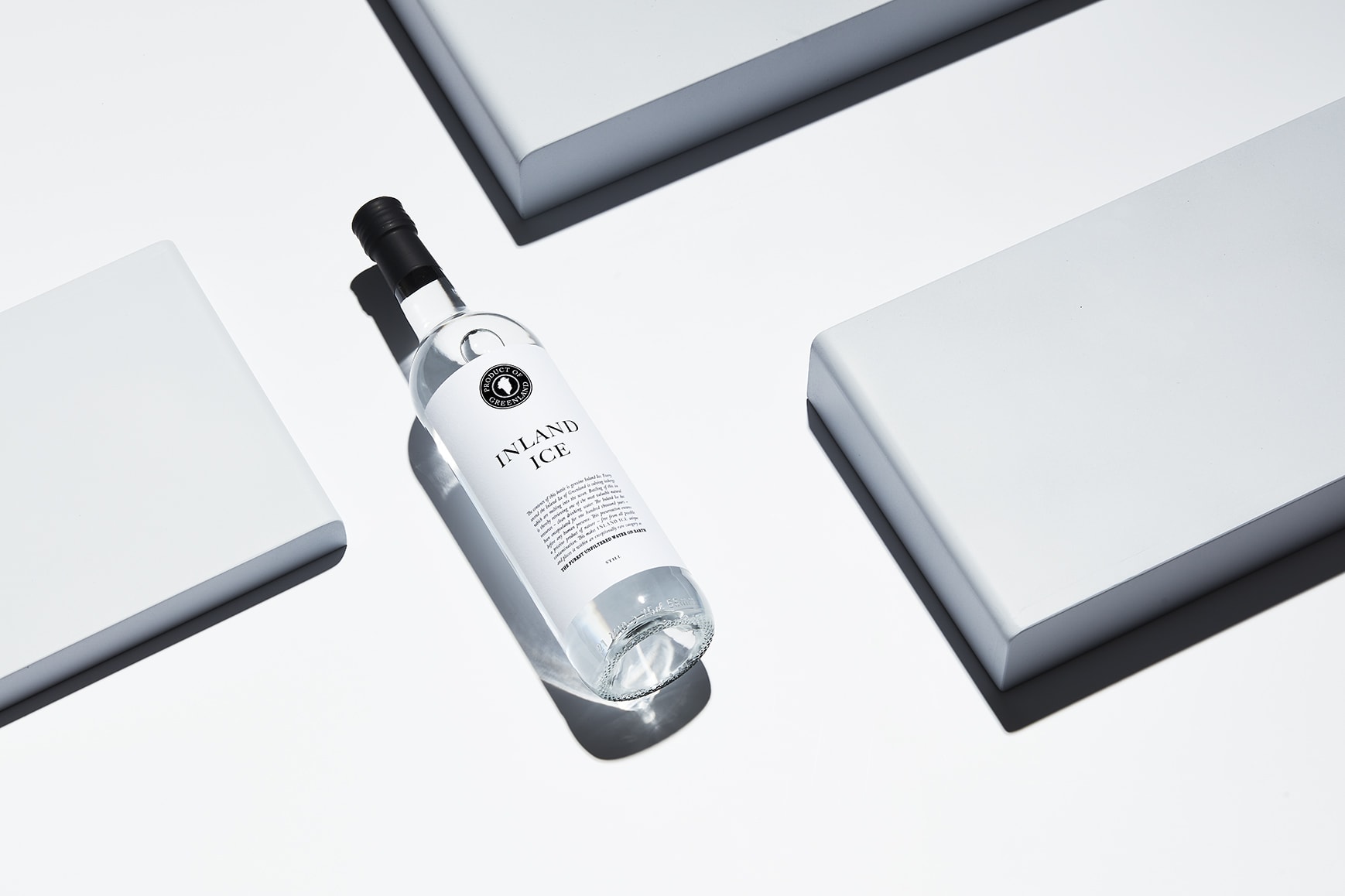
Gourmet water
The gourmet concept is not only reserved for food, wine, coffee, licorice, etc. There is also gourmet water, which, due to its taste and history, can help lift the overall taste experience.
Read more here.
Classification
As with wine, there are different classifications. There are also classifications of the mineral content and the carbon dioxide content, both of which are important for the taste experience.
Read more here.
Taste and senses
How do we perceive taste? What affects the overall taste? Read about our five senses and why they all influence the taste. Learn about mouthfeel, which is very important for the taste of water.
Read more here.
The flavor of water
It’s the minerals in water that contribute to the taste, but the mouthfeel plays a major role. Read about which minerals are in the water, how they affect the taste, and how carbon dioxide affects the taste.
Read more here.
Water tasting
Can you taste the difference? Which water to Use? Without carbonation or with carbonation? What influence do the glasses have on what you drink? In what order should you taste the water?
Read more here.
Gastronomy
The wrong water with food or wine can disturb or completely destroy the taste experience. Which factors in the water have influence and how do you pair water with food and wine?
Read more here.
My name is Carsten Skov, and I am the first Dane to have completed the education as a water sommelier at Doemen’s Academy in Germany, which is an old well established educational institution in the field of sensory training.
If you have any questions or comments, please write to me at cph@smagenafvand.dk